System Overview
1. System Architecture
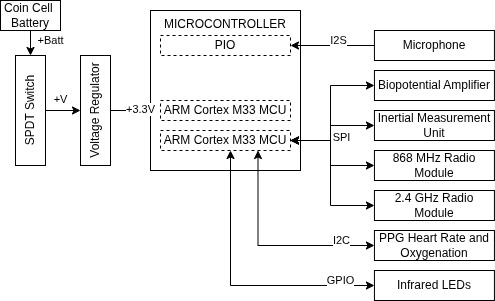
The foundation defines how sensors, acquisition modules, synchronization mechanisms, and wireless communication interconnect.
Particular attention is paid to timing precision and data throughput, key factors when multiple sensing modalities (e.g., IMU, ECG, EMG, or vibration sensors) must operate together.
2. Hardware Development
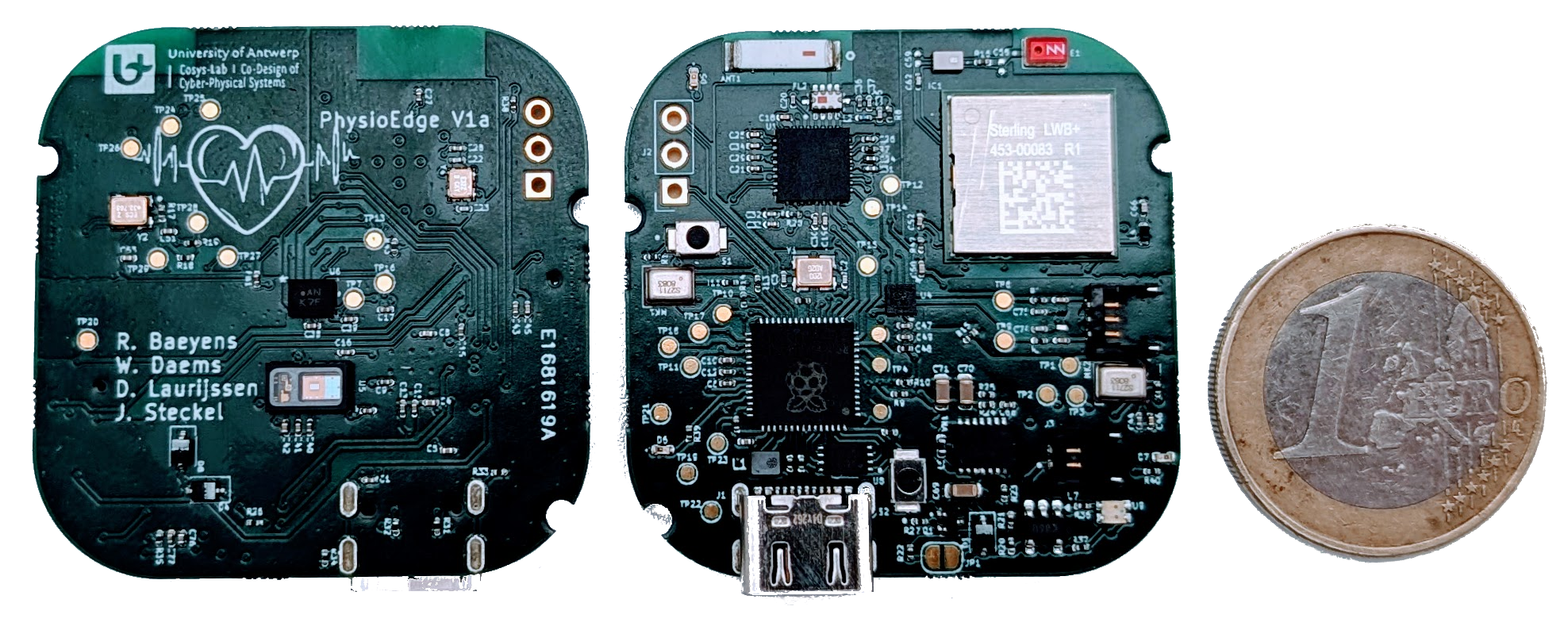
A custom integration PCB connects multiple COTS sensor modules and microcontrollers while ensuring robust power delivery, signal integrity, and synchronization.
3. Firmware and Software Development
Stable, low-latency communication between hardware components requires tight control of both firmware and software layers.
The PhysioEdge framework manages real-time data acquisition, synchronization, filtering, and wireless transmission, turning raw sensor inputs into structured, analyzable data streams.
This highlights the importance of cross-disciplinary skills, efficient embedded coding coupled with modular, maintainable software design.
4. Enclosure Development
Functionality meets usability through thoughtful enclosure design.
The demonstrator includes an integrated housing that protects electronics, manages thermal behavior, and simplifies handling. This approach is highly adaptable for various form factors and applications.
5. Finished Product
The result is a compact, wireless, synchronized multimodal acquisition platform. A tangible proof of concept that embodies system-level thinking and the power of hardware–software co-design.
It demonstrates how accessible components, when properly engineered, can rival the performance of far more expensive bespoke solutions.